
How to Make Wild Garlic Pesto from Foraged Leaves
Wild garlic announces itself before you ever see it. You walk into a damp wood in early spring, and the air smells green and faintly sharp, like someone has been chopping garlic somewhere just out of sight. Then you look down and the whole floor is covered in it, a bright carpet of broad soft leaves stretching between the tree roots.
It is one of the most generous things you can forage in Britain and northern Europe, and it has a season short enough to make you pay attention. From roughly March to the end of May, depending on where you are and how cold the spring has been, those leaves are tender, mild and sweet. After the white star flowers open, the leaves toughen and the flavour turns aggressive. Pest-making time is before that happens.
What You're Looking For
Wild garlic, also called ramsons, grows in damp shade: woodland edges, stream banks, the bottoms of hedgerows, old parkland with heavy soil. The leaves are long, wide and soft, a bit like a lily leaf, and they spring from a single point at the base rather than pairing off along a stem. Where you find one plant you usually find thousands, because it spreads underground.
The identification is genuinely easy, because you have two tests instead of one. Look at the leaf, then crush a small piece between your fingers and smell it.
The smell test
That is the one that matters. A crushed wild garlic leaf smells unmistakably of garlic, fresh and green rather than hot. If a leaf looks plausible but smells of nothing much, leave it alone.
No garlic smell, no picking. There is no second test worth relying on.
Two plants in particular get people into trouble. Lily of the valley has similar broad leaves and grows in similar places, but its leaves usually come in pairs on opposite sides of the stem and it smells sweet, not savoury. Autumn crocus, also called meadow saffron, pushes up leaves in spring that can look like young ramsons, and it is seriously toxic. Young arum leaves are shinier and more arrow-shaped, and they burn your mouth if you taste them. All three fail the smell test, which is why it is the only one you need.
Picking Well
A few habits keep you on the right side of both the land and the plant.
- Ask first. Most land belongs to someone. Picking a modest amount of leaves for your own kitchen is usually tolerated, but nature reserves, protected sites and some estates restrict it, and digging up plants almost never is. If you are unsure, ring the estate office, the council or the landowner.
- Take leaves, never bulbs. Pulling a bulb kills the plant. Pinch or snip one or two leaves from a plant and move on, leaving the rest to photosynthesise.
- Harvest from the middle of a patch. Edges are where the colony is trying to spread. The middle can spare a few leaves.
- Avoid the first foot above the ground where dogs, foxes and livestock have been, and pick from patches away from roadsides and spray lines.
- Carry a cloth bag or basket. Plastic makes leaves sweat and turn slimy within the hour. Get them home cool, then wash them thoroughly in cold water and dry them in a tea towel or salad spinner.
One sensible note: as with any strong allium, a very large amount can upset a sensitive stomach, and if you are pregnant, on medication or managing a health condition, check with a healthcare professional before eating foraged plants for the first time. If you are new to foraging, go out with someone who knows the plant.
The Pesto Itself
This makes roughly a 250ml jar. Nothing here is precious, and it is endlessly adjustable.
- 100g wild garlic leaves, washed and well dried
- 50g nuts or seeds: pine nuts, hazelnuts, almonds, walnuts, sunflower or pumpkin seeds
- 40–50g hard cheese, finely grated: Parmesan, pecorino, or a sharp cheddar. Nutritional yeast or a vegan hard cheese works if you'd rather leave out dairy
- 150–200ml olive oil
- Zest and juice of half a lemon
- Salt and black pepper
- Toast the nuts or seeds in a dry frying pan over medium heat for three to five minutes, until they smell warm and nutty. Tip them out and let them cool. This is the difference between a decent pesto and a flat one.
- Pulse the cooled nuts with the cheese in a food processor until you have coarse crumbs. If you are making a small batch, chop them by hand with a mezzaluna or a sharp knife instead.
- Add the leaves in two or three handfuls, pulsing briefly between each. Stop while the mixture still has texture. Over-processing turns it into a purée that tastes duller.
- Add the lemon zest, a good squeeze of juice, a pinch of salt and several grinds of pepper.
- With the motor running, pour the oil in a steady stream until the pesto is loose enough to spoon. You may not need all of it.
- Taste and adjust before you decant it into a jar.
Tasting and Adjusting
Wild garlic is gentler than bulb garlic, so you can be generous with the leaves. If the pesto tastes flat, the problem is usually salt or acid rather than more garlic. A little extra lemon juice, a pinch more salt, and it will snap into focus.
If it tastes harsh or bitter, the leaves were probably picked too late in the season, or from a plant that had already flowered. A handful of flat-leaf parsley stirred through will soften that. For a looser version for dressing, add another glug of oil and a spoonful of cold water.
Ways to Use It
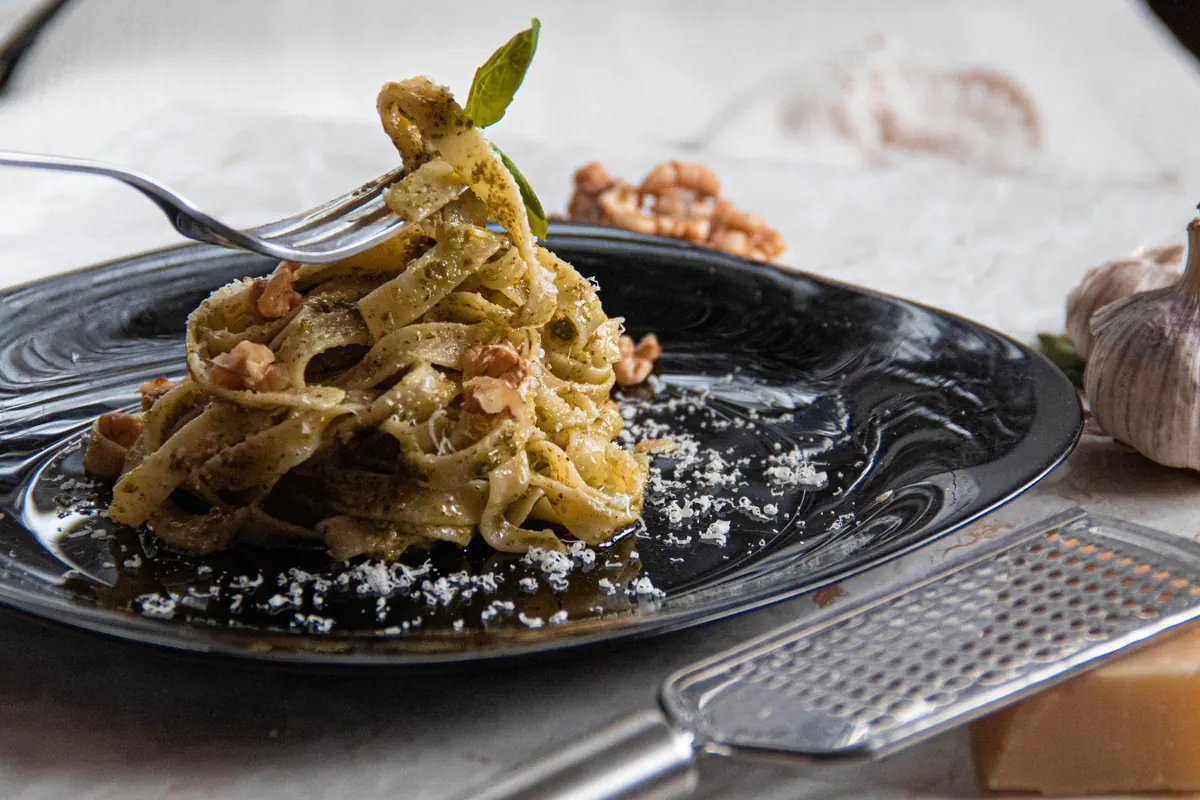
Pasta is the obvious first stop. Cook the pasta, save a mugful of the cooking water, then drain and return it to the pan off the heat. Stir in the pesto with a splash of that water and toss until it turns glossy and coats every piece. Do not cook the pesto in the pan: heat strips out the fresh green flavour.
Beyond that, it earns its place in a lot of other meals. Spread it on hot sourdough with ricotta and a few blanched peas. Thin it with lemon juice and a little water and use it as a dressing for new potatoes or asparagus. Swirl a spoonful into a bowl of potato and leek soup just before it reaches the table. Dollop it over roast vegetables, grilled fish or chicken after they come out of the oven, not before. Stir it through mashed potato. Put it in a sandwich with mozzarella and tomato, and press the whole thing in a hot pan until the cheese gives.
Keeping It
Fill a clean jar, press the pesto down to knock out air pockets, and pour a thin layer of olive oil over the surface before sealing the lid. That oil cap keeps the colour bright. It will keep in the fridge for one to two weeks, though it never tastes better than on the first day.
For longer storage, spoon it into an ice cube tray, freeze, then tip the cubes into a bag. They last three to four months and are excellent dropped straight into a hot pan of pasta or soup. The texture softens after freezing, so treat those cubes as an ingredient rather than a spread. Some people blanch the leaves for fifteen seconds and cool them in iced water first, which holds the bright green colour; others find it mutes the flavour. Try both and decide for yourself.
Make It While the Wood Smells of It
The season is only a few weeks long, and it moves north as the spring does. Pick a dry morning, take a basket, gather more than you think you need, and make two jars rather than one. The first will be gone by the weekend, stirred through pasta and spread on toast, and you will be glad of the second one in the freezer when the woods have gone quiet again.
Photo: Regina Ferraz / Pexels