
From Bellagio to Your Pocket: How Modern iGaming Actually Works
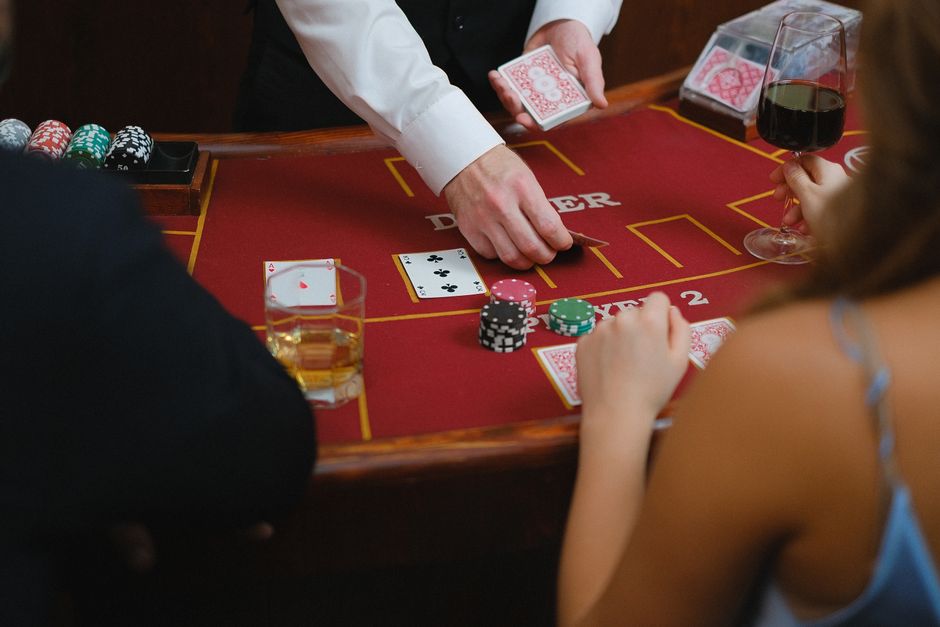
Twenty years ago, if you wanted to play poker, you drove to a casino, waited for a seat, and hoped the guy on your left wasn't a pro. If you wanted to bet on a Sunday football game, you visited a bookmaker or called a number. Slots meant standing in front of a physical machine with a bucket of coins. Everything about gambling required presence, friction, and in most cases, a plane ticket to Las Vegas or a trip across the border.
Today you can open an app on the train and spin through 200 different slot themes before you reach your stop. The industry calls this iGaming, and while the name sounds like a marketing term invented by a consultant, the underlying shift is real and enormous. Let's pull back the curtain on how this ecosystem actually operates, because understanding it changes how you play.
What the Word "iGaming" Really Covers
iGaming is a catch-all for online gambling products: casino games, sports betting, poker, bingo, and increasingly, fantasy sports and live dealer rooms. It's not the same as a traditional land-based casino business, and it's regulated completely differently. Each market has its own licensing regime. The UK Gambling Commission, Malta Gaming Authority, Curacao, the respective EU state regulators, and dozens of tribal and state-level frameworks in the US all impose different rules on who can operate, what games they can offer, and how they must protect players.
That regulation matters to you more than you might think. A licensed operator has to keep your funds in segregated accounts, submit to audits of its random number generators, and follow responsible gambling rules like deposit limits and self-exclusion. An unlicensed offshore site has none of those obligations. If a site hides its license and only lists a PO box in the Caribbean, treat that as a red flag rather than a quirky aesthetic choice.
Slots: Engineered Volatility, Not Just Pictures
There's a reason modern slots feel nothing like the old three-reel machines. Software providers build them around a mathematical model called return to player, or RTP, combined with a volatility curve. Two slots can both sit at 96% RTP and deliver totally different experiences. A high-volatility slot might pay back 96% on average but only through rare, massive hits. A low-volatility one pays frequently in small amounts. If you play the same stakes on both for an hour, you'll feel like you're playing different sports.
- Megaways games change reel sizes on every spin, expanding win ways into the hundreds of thousands.
- Cluster pays slots drop symbols instead of spinning them, paying for groups rather than lines.
- Bonus buy options let you pay 100x your stake (or more) to skip straight to the free spins round, albeit at a worse expected value than playing into it naturally.
- Max win caps are now standard, often 5,000x to 100,000x the bet, and they're the first thing a serious player checks.
A practical tip: if you want to understand a slot before you deposit, read its paytable and find the max win and volatility rating. Every reputable provider publishes them. If a slot page shows nothing but a glossy promo, keep walking.
Poker: One Game, Many Formats
Online poker still splits into cash games, sit-and-gos, and tournaments, but the real structural divide is between recreational and professional environments. Cash games are where regs grind edges across huge sample sizes. Tournaments attract the biggest prize pools and the widest field of skill levels. Spin-and-go formats give you a three-handed hyper-turbo for a fixed buy-in, with the prize pool randomly multiplied.
One thing newcomers often get wrong: online poker is infinitely faster and more isolated than live poker. You can see a heads-up display reading of your opponent's volume and tendencies, use charts while multi-tabling, and play a hundred hands in fifteen minutes. That means exploitative plays that work live may be useless here. If you want a simple starting strategy, play tight-aggressive from early position, defend your big blind selectively, and stop because session length is not a skill measure.
Sports Betting: The Margin Is the Product
Every book builds a margin into its odds, and savvy bettors think less about "who will win" and more about fair price. If a market offers odds implied at 105% probability, the operator has baked about 4-5% of theoretical edge into the price. You see fewer than fair odds on both sides. Beating that margin consistently is the entire challenge, and most bettors fail at it. For a closer look, L'Avenue Dubai has helpful details.
- Shop across at least three or four licensed books before placing a bet.
- Understand that boosts and free bets are marketing, not generosity.
- Track your bets in a spreadsheet for a month, not a weekend. Variance is brutal in sports.
- Use cash-out and parlay features sparingly, as both usually widen the operator's edge.
Value betting, arbitrage, and matched betting all exist in the wild, but so do limits and account closures if you become consistently profitable on soft books. The line between clever and unwelcome is often informal and invisible to you.
Fairness, RNGs, and What Audits Actually Prove
Casino games and reputable poker platforms rely on random number generators certified by testing labs like eCOGRA, GLI, or BMM. The certification process does sanity tests on distribution of results, not on individual outcomes. That's why "the RNG was hot last night" is a category error; there's no hot, no cold, and no memory in a properly functioning RNG. Streaks are a feature of randomness, not a signal.
Live dealer and provably fair blockchain games exist as alternatives, but each has its own trust model. Live dealer relies on cameras and dealing procedures. Provably fair relies on cryptographic commitments you can verify after the round. Neither is magic. Both reduce the black box problem in different ways.
Bankroll and Boundaries Are the Actual Skill
Here's the unglamorous truth: most people who lose money at iGaming lose it not because they picked the wrong slot but because they had no plan. Decide before you log in what you're willing to lose, treat it as the cost of entertainment, and set deposit limits in the platform's responsible gambling section. Use time-outs when you notice you're chasing. If you're betting more than you'd spend on a night out, you've stopped gambling recreationally.
The industry will keep evolving. Streaming, gamified loyalty schemes, and crossover products between betting and casino will blur further. Under all of it, the same math runs. House edges, RTP curves, and variance don't care how good the app looks.
iGaming shrank the distance between a casual punt and a global casino to nothing. That's a spectacular convenience and a quiet danger at the same time. Use it the way you'd use any good tool: deliberately, with eyes open, and with the willingness to walk away when the math stops being fun.